A Note From Our Managing Director:
Greetings from PAVE Europe! We hope you’ve had a great start to the year.
As we move into spring, the pace of activity across the autonomous mobility ecosystem continues to accelerate. In recent months, we have seen strong engagement across our community – from major industry events, new partnerships, and opportunities to engage with the general public.
This period has reinforced the importance of collaboration and shared understanding as Europe moves closer to real-world deployment of automated mobility solutions. We welcomed a new Chairman, Dr Matthias Schubert (TÜV Rheiland) and Vice-Chair, Vibeke Harlem (Ruter As) early this year and our mission remains clear: building public trust and education for autonomous vehicles across Europe.
In this Spring Update, we are pleased to share highlights from recent activities, updates from our projects and members, and a look ahead at the months to come. Thank you, as always, for your continued support and engagement.
Warm regards,
Guido Di Pasquale
Managing Director, PAVE Europe.
Upcoming Events
PAVE Europe will be participating at various events across Europe in the upcoming months.
- APR 27th – 29th: ITS European Congress, Istanbul
- MAY 4th – 5th: Automated Mobility Summit, Zurich
- MAY 18th – 19th: TRA, Budapest
- JUN 9th: CCAM-ERAS Final Event, Brussels
- JUN 17th – 18th: MOVE 2026, London
- JUN 23rd – 25th: Autonomous Vehicle Tech Expo, Stuttgart
- JUN 30th – JUL 1st: Reuters Automotive Europe, Frankfurt
More details can be found via our events calendar.
TRACE Perception Study
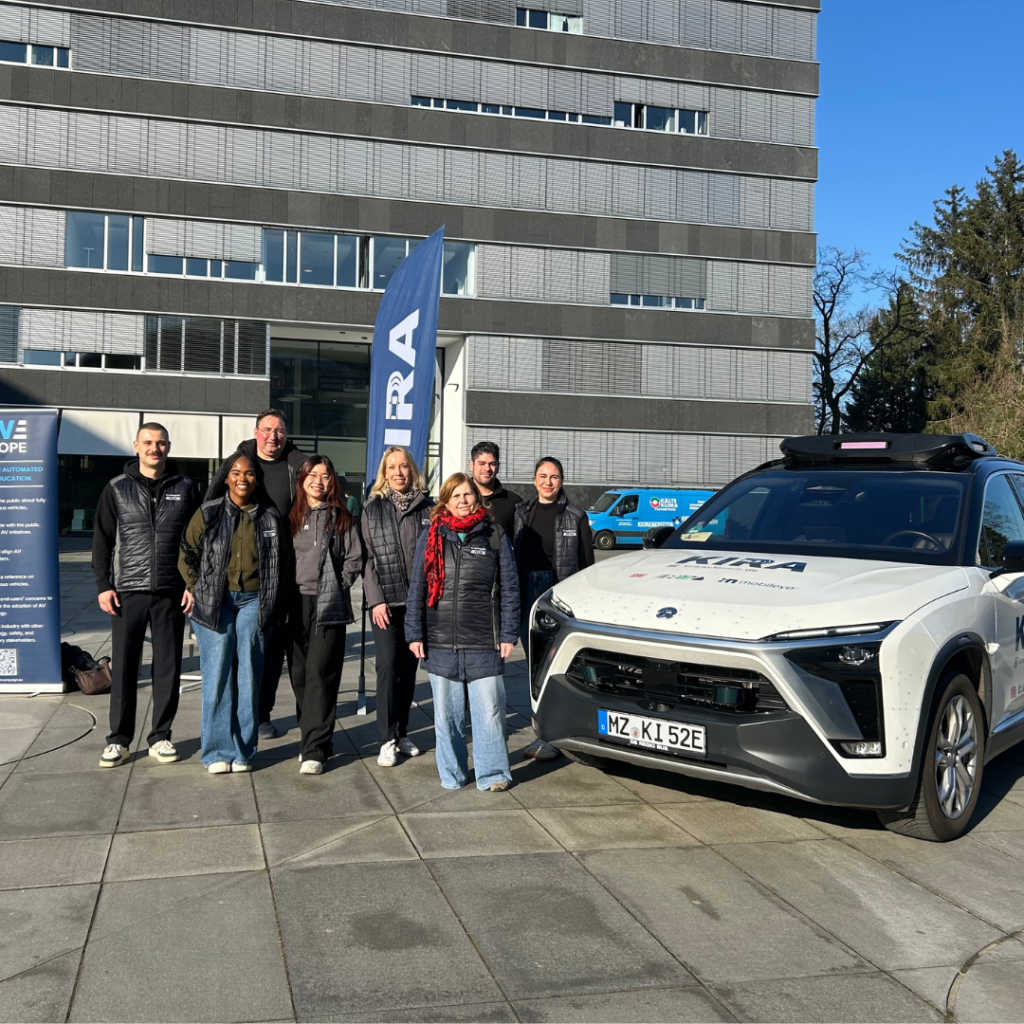
What happens when people experience autonomous mobility for the first time? PAVE Europe was proud to be in Darmstadt for the first TRACE (Trust and Reactions to Autonomous and Connected Vehicle Experiences) Perception Study.
Led by P3, and supported by PAVE Europe, the study explores how real-world experiences influence public trust in automated mobility. In collaboration with the KIRA project, members of the public had the opportunity to experience Level 4 autonomous passenger services and share their perceptions before and after their ride. The study places direct user experience at the centre – capturing reactions, questions, and reflections as participants engage with the technology in a real-world setting.
We are currently analysing the data and will share key findings with our community in the coming weeks. TRACE will continue with further field studies across Europe. Interested in hosting?
Event Highlights
Over the last few months, PAVE Europe has continued to engage in European events, contributing to discussions on scaling, integration, and public trust in automated mobility.
BestStay, Zagreb (February 2026)
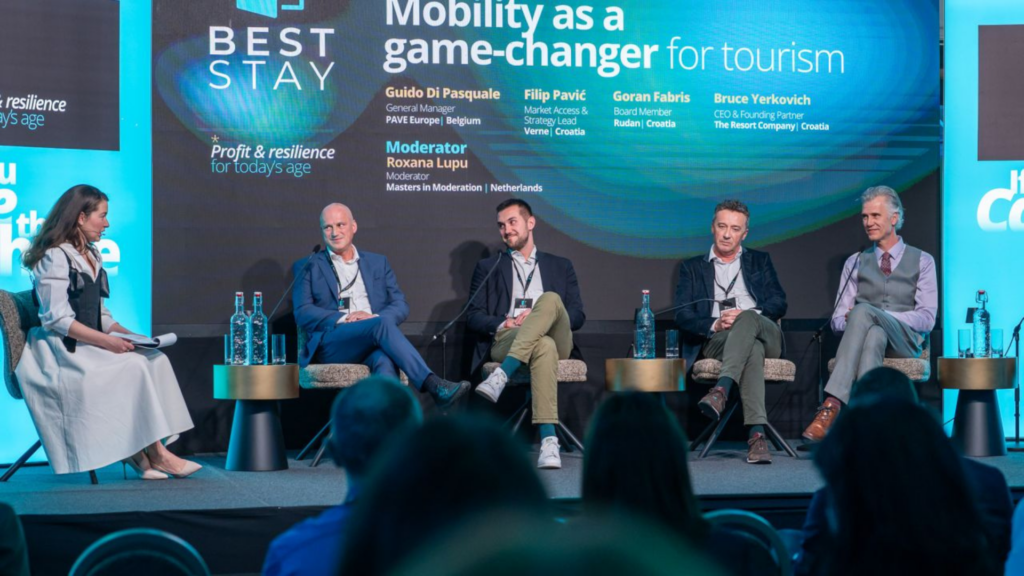
PAVE Europe was in Zagreb in February for the BestStay Event 2026. Held annually in Croatia, Best Stay is one of Southeast Europe’s leading hospitality and tourism conferences, gathering 250+ hoteliers, tourism professionals, and innovators.
Gudio Di Pasquale joined a panel “Mobility as a Game-Changer for Tourism”, alongside industry leaders, to discuss how automated transport can enhance the guest experience, improve accessibility, and support more sustainable destinations.
We were also proud to support the Best Stay Student Challenge, encouraging the next generation to contribute innovative ideas at the intersection of mobility and hospitality.
Autonomy European AV Summit, London (March 2026)

PAVE Europe was proud to participate in Autonomy’s European AV Summit 2026 as an official partner.
Guido Di Pasquale moderated a panel on “The European Path to Autonomous: AVs within Public Transport”, bringing together perspectives from industry and public transport operators. The discussion highlighted the importance of collaboration, innovation, and integration with public transport systems to enable large-scale deployment.
The summit convened stakeholders from across technology, policy, insurance, and business – reinforcing the need for cross-sector alignment as Europe advances toward automation.
IT-Trans, Karlsruhe (March 2026)
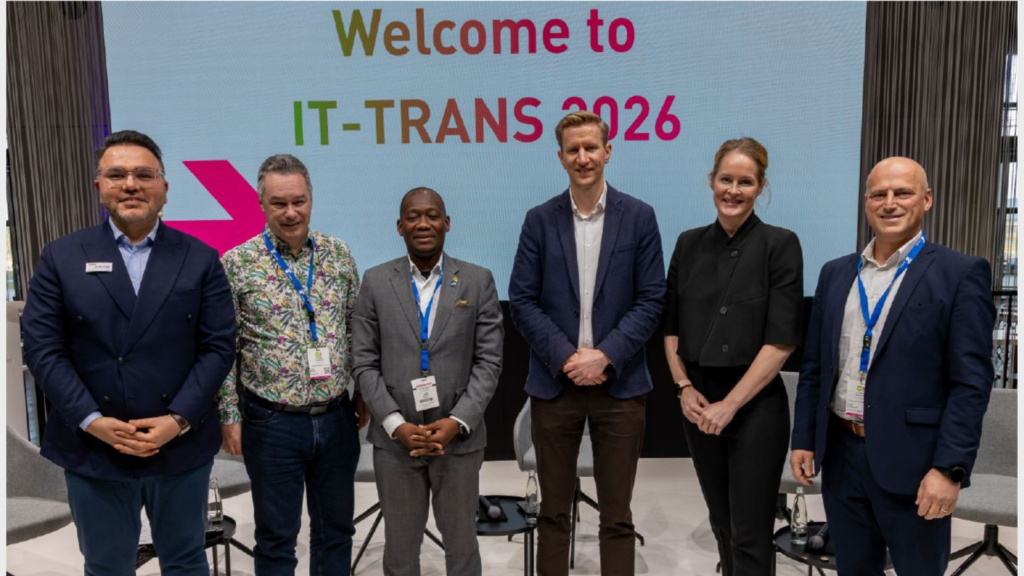
At IT-TRANS in Karlsruhe, PAVE Europe contributed to key discussions on scaling automated mobility within public transport systems.
Guido Di Pasquale moderated a session on “Large-scale Demonstrations of Automated Vehicles – The Needs of Public Transport”, focusing on the requirements for deployment at scale – from access to Level 4 vehicles to stable regulatory frameworks and sustainable funding models.
He also joined the Mobility Re-defined CEO Roundtable on a session “Entering the Era of Mobility 5.0”. The discussion ranged from the evolving role of transport authorities as they integrate public transport, shared mobility and digital platforms, how governance and regulation will shape the next era of sustainable mobility, and more.
Intertraffic, Amsterdam (March 2026)
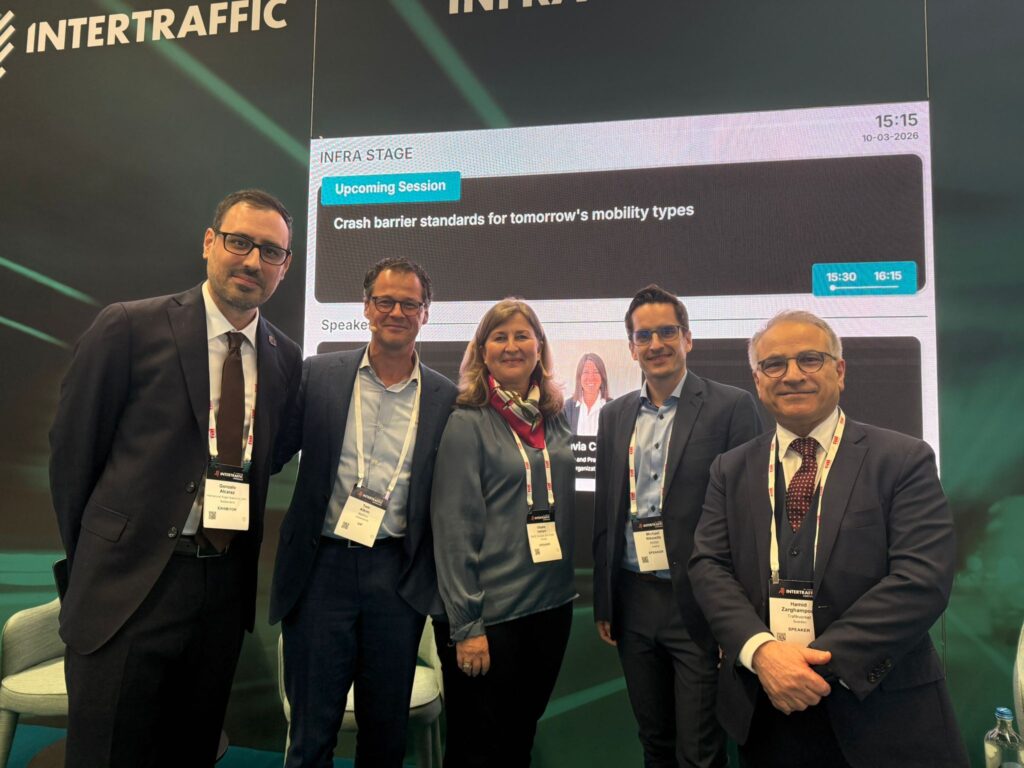
PAVE Europe was pleased to contribute to Intertraffic, where Vice-Chair Vibeke Harlem presented in the session “Paving the Way for CCAM: Transforming Public Space for Automated Mobility.” Michael Nikowitz, Chairman of our Public Sector Advisory Council also presented as part of this discussion.
The discussion explored how connected, cooperative, and automated mobility (CCAM) will reshape public space – impacting infrastructure design, urban functionality, and accessibility.
The session reinforced the importance of aligning technological innovation with urban planning to ensure that automated mobility contributes to more inclusive and efficient cities.
PAVE Europe New Members
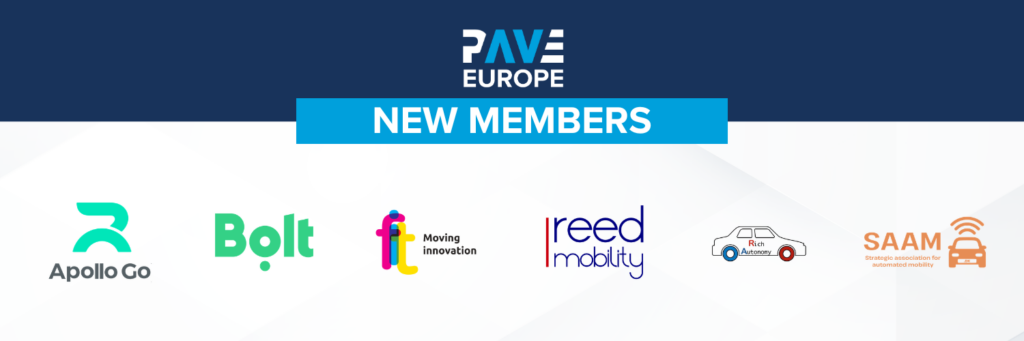
We are delighted to welcome new members to PAVE Europe: Apollo Go/Baidu, Bolt, FIT Consulting, Reed Mobility, Rich Autonomy, and SAAM Denmark.
Each of these organisations brings valuable expertise and perspectives, strengthening our shared mission to advance safe, inclusive, and sustainable automated mobility across Europe.
We are proud to work alongside such forward-thinking members, and we look forward to the insights and collaboration they’ll bring!
Automated Mobility in Practice: A Course for Mobility Decision Makers
PAVE Europe, the University of St. Gallen and Beta Mobility invite the public sector and mobility decision makers for this three-day course on autonomous vehicles.
As the technology is advancing quickly, there is a need to increase knowledge and education on strategic frameworks, governance tools, and practical experience to move beyond pilots and shape automated mobility in the public interest.
Rather than focusing on the technology alone, the course treats automated mobility as a strategic and governance challenge. It supports mobility-decision makers in clarifying what they want automated mobility to achieve, how to steer markets toward those outcomes, and what role they should play in a rapidly changing mobility value chain.
Automated Mobility Summit
The Automated Mobility Summit will gather industry, policymakers, and key stakeholders between 4th and 5th May in Zurich, Switzerland. The two-day event will focus on the future of autonomous mobility in both Europe and Switzerland, and feature live demonstrations at Innovation Park Zurich.
The event is being organised by PAVE Europe member Swiss Association for Autonomous Mobility (SAAM), and is supported by PAVE Europe.
Publications, News, Insights, and Thought Leadership
A collation of AV news, publications and reports on the future of autonomous mobility.
PAVE Europe Report
This report highlights PAVE Europe’s activities and impact from its launch in 2023 through 2025. It captures the growth of the organisation, the strength of its community, and the initiatives delivered. Through events, virtual panels, courses, and more PAVE Europe remains dedicated to advancing public education for autonomous vehicle technology.
Thousands of lives to be saved under bold new Road Safety Strategy
The UK Government announced its first road safety strategy with plans to reduce deaths and serious injuries on Britain’s roads by 65% by 2035. The strategy aims to show that the government is listening and leading: building a safer future for all UK road users.
Deutsche Bahn Study: Autonomous vehicles can massively improve the quality of public transport
Autonomous shuttles and buses could raise Germany’s public transport system to a new level of quality. This is the conclusion of a study commissioned by DB Regio, the regional transport division of Deutsche Bahn. If implemented nationwide, autonomous driving would improve services for passengers, reduce traffic congestion in cities, and better connect rural areas.
European Commission remains committed to halving road deaths by 2030
The European Commission published its report to track progress towards the EU’s goal of halving road deaths and serious injuries by 2030. While progress has been made in reducing road fatalities, it reveals that the current pace is insufficient.
From Pilots to Deployment: A European Roadmap for Automated Mobility in Cities
In a recent interview with Alliance of European Mayors – Mayors of Europe, Guido Di Pasquale, Managing Director at PAVE Europe discusses a critical shift in automated mobility in European cities: moving from isolated pilot projects to full-scale deployment.
The conversation explores what it will take for cities to make that transition and how industry and policymakers can work together to turn experimentation into real-world impact. This is part of our ongoing effort to engage more closely with cities across Europe on the future of urban mobility.
Autonomous Mobility in Leuven
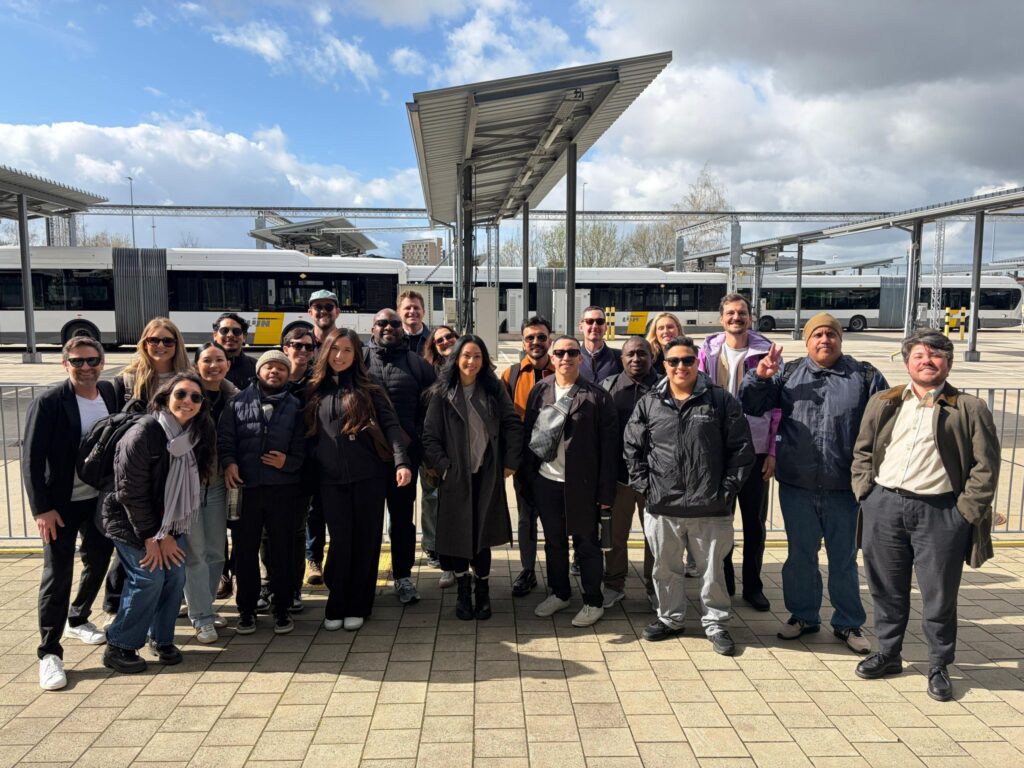
PAVE Europe were delighted to join a visit in Leuven in March to experience the WeRide autonomous shuttle with De Lijn.
Alongside Billy Riggs, member of our Academic Advisory Board, students from the University of San Francisco experienced the technology and were then invited to dive into prototyping the deployment of autonomous mobility solutions for European cities (Ghent, Bruges, and Barcelona).
The experience was organised by Espaces-Mobilités and De Lijn.
Partnerships for the Future of Autonomous Mobility
AVE Europe continues to strengthen its partnerships to support informed and balanced conversations around autonomous mobility. By working with leading media platforms and industry voices, we aim to amplify credible insights, share real-world developments, and increase public understanding of automated vehicle technologies.
These collaborations play an important role in ensuring that the transition to autonomous mobility is transparent, accessible, and grounded in clear, evidence-based communication.
Advancing Innovation Through EU Projects
GOLIA Project
The GOLIA project invites you to take part in the survey “Validation of Behavioural Enablers and Incentives”. The project is exploring key behavioural enablers and incentives for mobility solutions across different demographic groups (referred to as Personas).
The aim of the GOLIA project is to support the design and implementation of inclusive, sustainable, and user-centred mobility solutions by improving our understanding of behavioural drivers and local contexts. Your input will help us validate our assumptions, refine our approach, and ensure that future solutions are practical, relevant, and impactful.
In this survey, you will first be asked to select the mobility modes that are most relevant to your expertise or interest. For each selected mode, you will receive a short set of 8 multiple-choice questions, which takes approximately 5 minutes per mode to complete. Learn more and contribute to the survey via the button below.
CCAM-ERAS Final Event
The final CCAM-ERAS project event will take place on Tuesday 9th June in Brussels, bringing together the project community to explore key findings on the future of skills for connected, cooperative, and automated mobility.
The CCAM-ERAS project has undertaken a 2 year programme of research to establish what the social, technical and employment impacts of emerging self-driving technology could be. Undertaken by partners with expertise in economics, road operation, mobility, technology and research the findings are intended to enhance the ability of decision makers across industry, policy, labour markets, skills, and investment.
Join us via the button below.
CAMINO-2
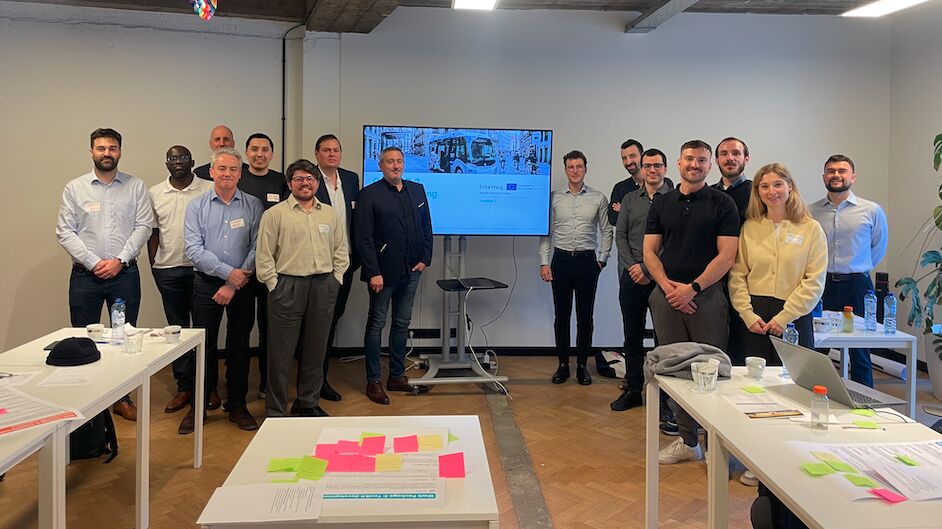
CAMINO-2 has officially kicked off, bringing together partners from across Europe to advance the deployment of shared autonomous vehicles.
Over the next 3.5 years, the project will establish four living labs in real-world environments and develop practical tools – including a Planning Blueprint, Implementation Toolkit, and Ambassador Training Programme – to support wider adoption.
The project launched with a first meeting in Leuven and Brussels, where partners aligned their expertise and set the foundation for the work ahead.
We’re also excited to be part of several new projects launching soon – stay tuned for updates!
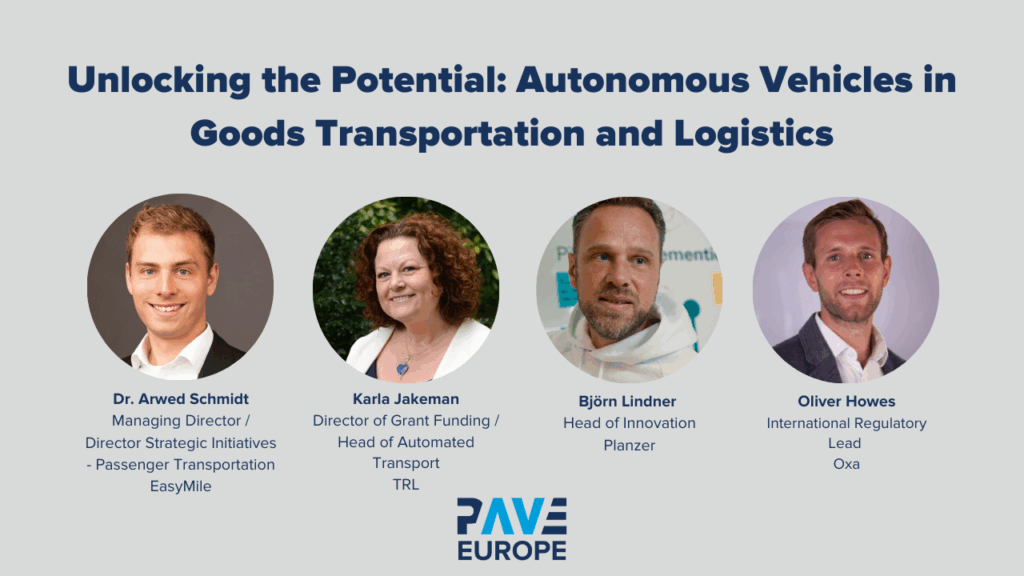
Catch Up on PAVE Europe Panels
Catch up on the latest virtual panels from PAVE Europe below:
About PAVE Europe
Partners for Automated Vehicle Education (PAVE) Europe is a non-profit coalition that seeks to raise the level of public knowledge of automated vehicle technology and the potential benefits for safety, mobility, equity, and congestion. PAVE Europe’s diverse membership includes international corporations, start-ups, consumer advocates, nonprofit groups, and other stakeholders. PAVE Europe seeks to educate and facilitate dialogue among industry, policymakers, and the public to advance the development and deployment of AV technology.