PAVE Europe was proud to attend and participate in EUCAD 2025, the 5th European Conference on Connected and Automated Driving. The event brings together leading industry experts, researchers and policymakers to exchange insights, foster collaboration, and drive progress toward the deployment of smart, inclusive and sustainable mobility solutions.
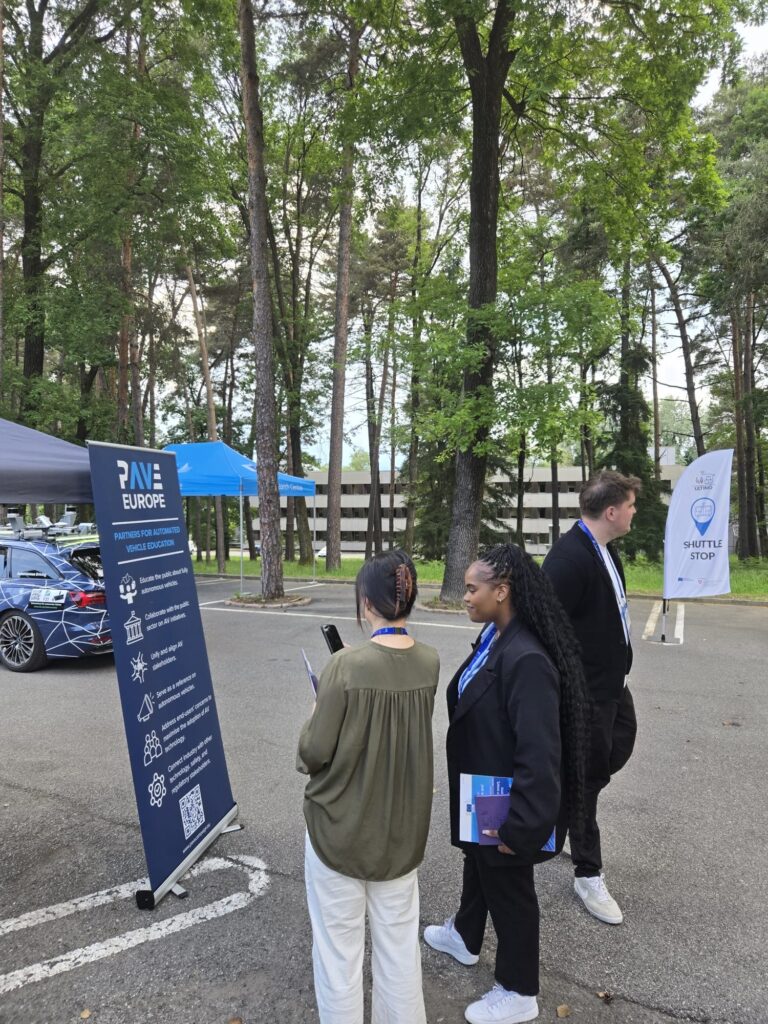
Our activities throughout EUCAD 2025 were focused on engaging with attendees to gauge perception in autonomous mobility technologies and strategies to build public trust. We were joined by PAVE Europe member P3 to better understand concerns and aspirations related to autonomous vehicles. This engagement reaffirms one of our central beliefs: building trust in autonomous mobility starts with listening to people. From first-time users to experienced stakeholders, every voice matters in shaping technologies that are not only innovative but also inclusive and responsive to real societal needs.
Human-Centred CCAM
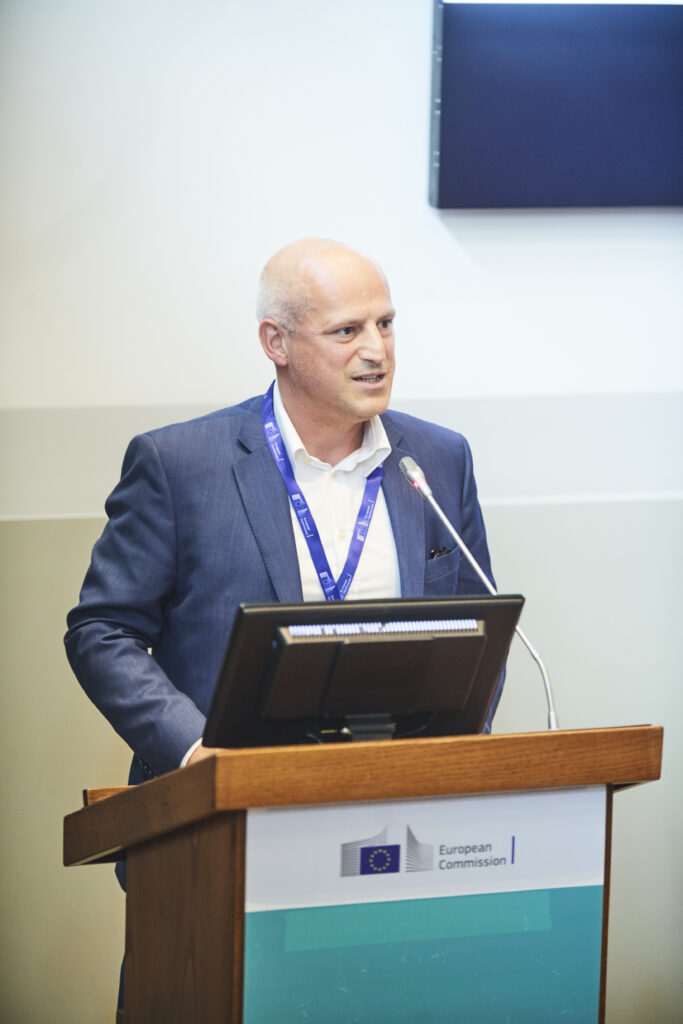
A key moment during the conference was our participation in the session titled “Human-centred CCAM: Navigating User Needs and Policy Goals to Design CCAM for People and with People.”
Moderated by Stéphane Dreher (ERTICO – ITS Europe), this panel brought together diverse voices from ongoing CCAM research projects, including CONDUCTOR, AI4CCAM, CCAM-ERAS, and Diversify-CCAM. The conversation focused on how to centre human needs, expectations, and concerns in the development of CCAM solutions. The panel explored methodologies that bridge the gap between the technology and real-world user expectations, emphasising ethical considerations, societal preparedness, skills and upskilling, as well as the crucial role of public awareness.
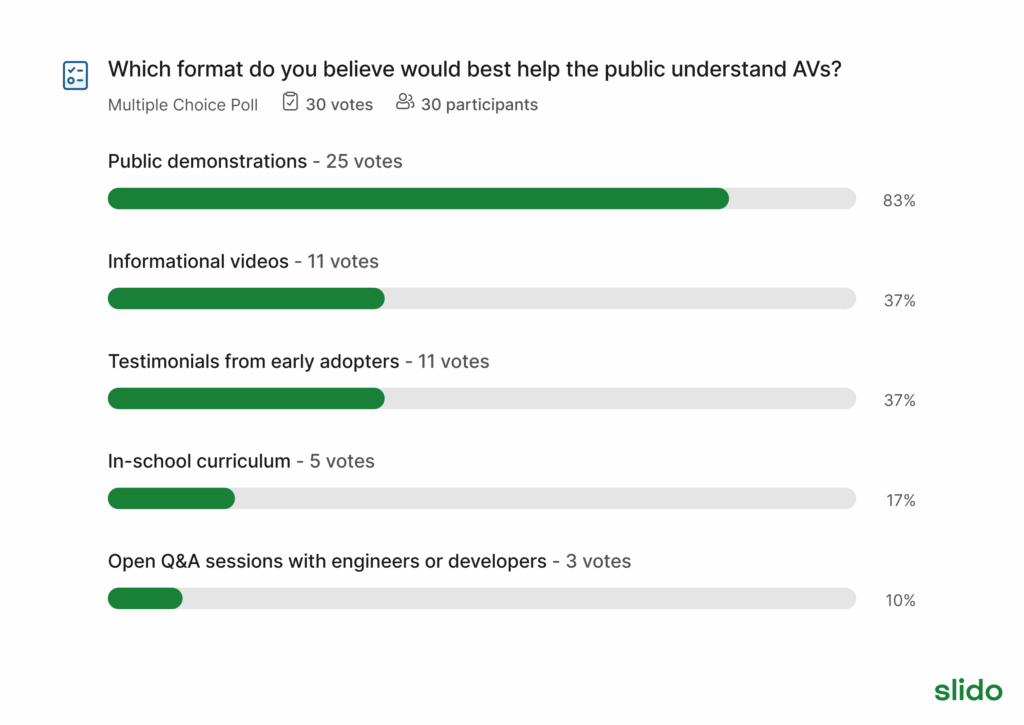
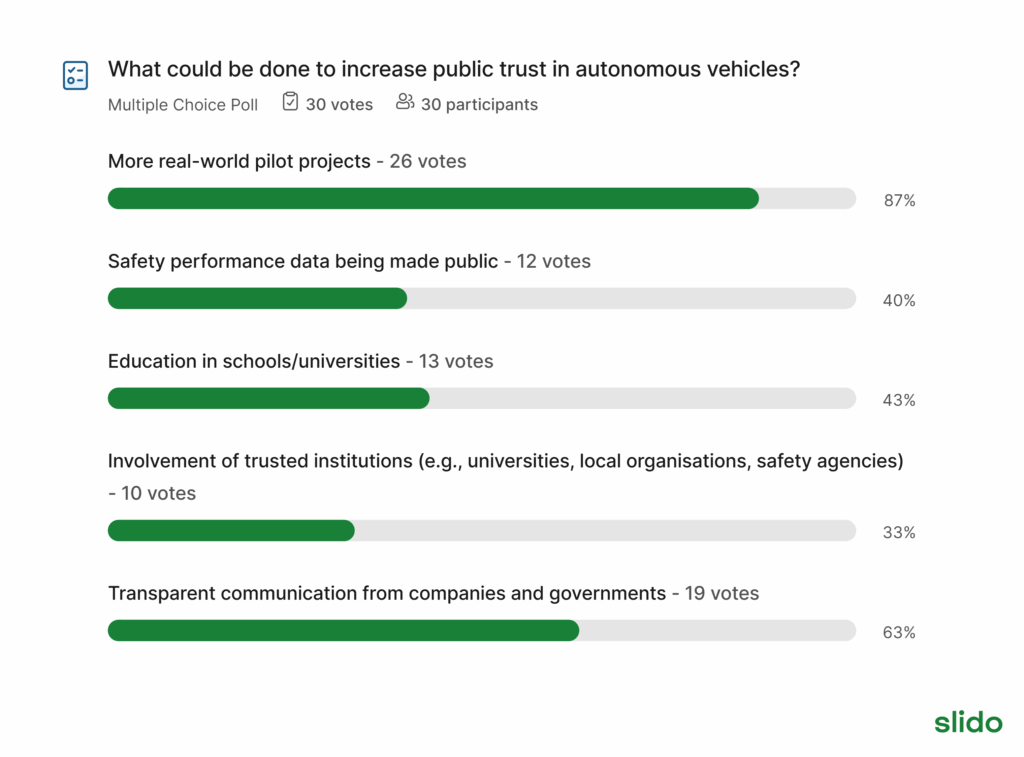
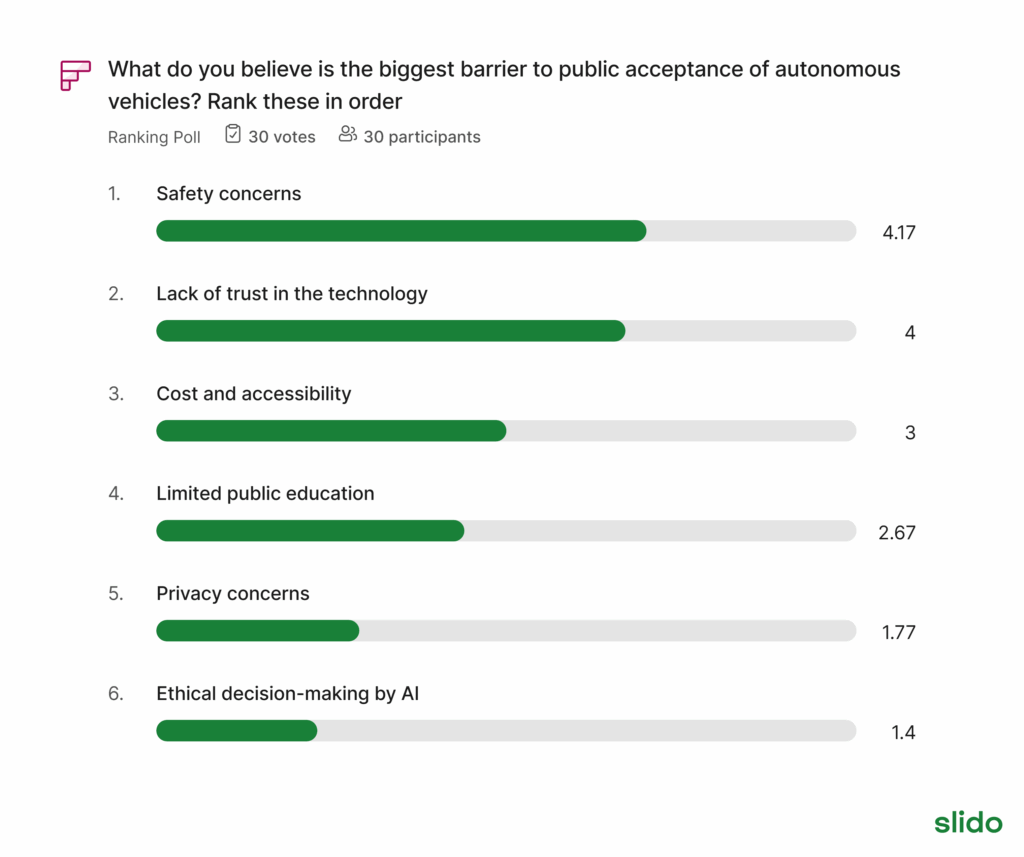
Guido Di Pasquale (PAVE Europe) invited the audience to take part in a live survey during his presentation to capture real-time insights into attitudes toward automated mobility. While not a representative sample of the general public, the responses reflect the views of an engaged and informed audience – including researchers, policymakers, and industry professionals – who are actively shaping the future of CCAM.
These quick polls offered a snapshot of current thinking around trust, methods of engaging with the general public, and perceived barriers to adoption. They also served to highlight PAVE Europe’s mission of automated vehicle Education, Engagement, and Experience, reinforcing our commitment to grounding technology development in public understanding and meaningful dialogue.
PAVE Europe also presented the Diversify-CCAM project. The EU-funded project aims to develop tools and methods that help Connected, Cooperative and Automated mobility (CCAM) developers, transportation planners, and policymakers integrate social diversity into shared autonomous mobility systems across Europe. The project emphasises the need to not only engage users in the development of autonomous vehicle technology, but also to proactively address potential inequities and societal impacts.
Collaboration
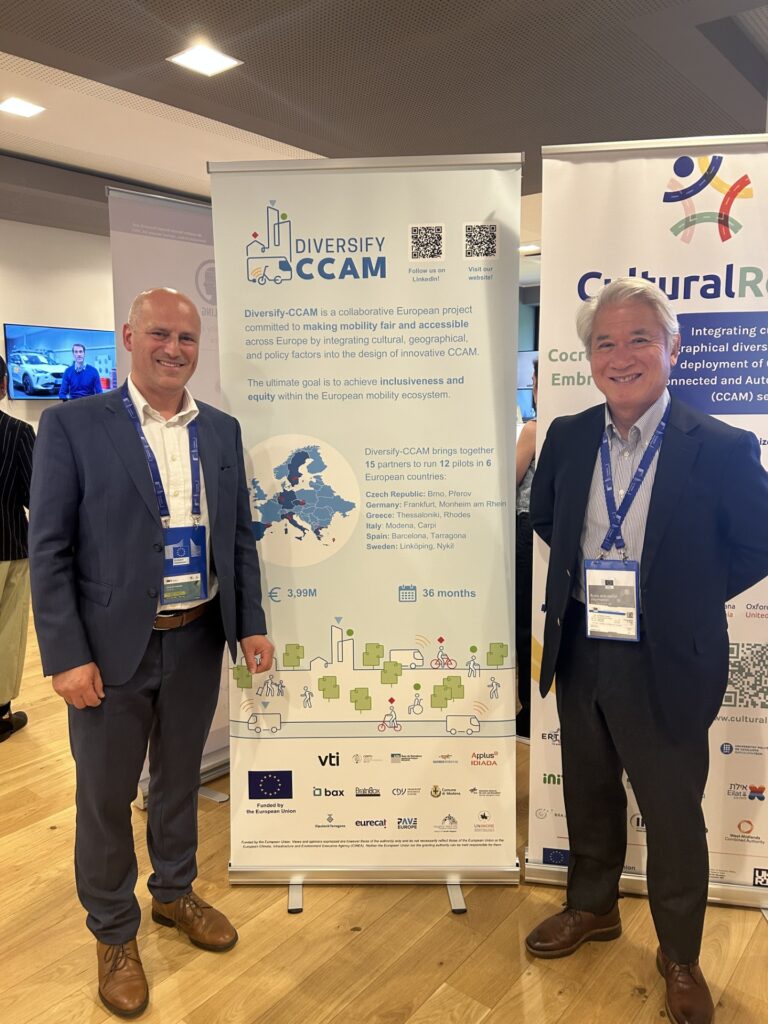
EUCAD 2025 was an excellent opportunity to connect with members and partners from several European projects that PAVE Europe is a part of.
We had the pleasure of meeting with members of our Diversify-CCAM Stakeholder Board, including Professor Billy Riggs (University of San Francisco) and Takahiko Uchimura (Mobility Innovation Alliance Japan / Institute of Industrial Science, University of Tokyo).
In addition to Diversify-CCAM, we were pleased to see representatives from CCAM-ERAS and SYNERGIES projects. PAVE Europe Members including MOIA, Padam Mobility, AVL, Imagry, New Mobility Solutions Hamburg, P3, SAAM, DB Regio, AustriaTech, UITP, and Ruter were also in attendance to advance conversations on the deployment and scaling of shared automated transportation. John McSweeney (UITP) led a session on “Automated mobility – a key tool to achieve EU targets in 2030 and beyond” on the final day of the conference.
Looking Ahead: A People-First Future
EUCAD 2025 reinforced the need to place people at the centre of automated mobility. As policymakers, researchers, and industry leaders came together to shape the future of transport, PAVE Europe remains dedicated to facilitating transparent dialogue, fostering trust, and advancing human-centric innovations.
We thank the organisers of EUCAD 2025 and the European Commission’s Joint Research Centre for their kind invitation and for creating a forum where collaborative, inclusive, and visionary mobility solutions can take shape.

About PAVE Europe
Partners for Automated Vehicle Education (PAVE) Europe is a non-profit coalition that seeks to raise the level of public knowledge of automated vehicle technology and the potential benefits for safety, mobility, equity, and congestion. PAVE Europe’s diverse membership includes international corporations, start-ups, consumer advocates, nonprofit groups, and other stakeholders. PAVE Europe seeks to educate and facilitate dialogue among industry, policymakers, and the public to advance the development and deployment of AV technology.
To view our upcoming events, click here.