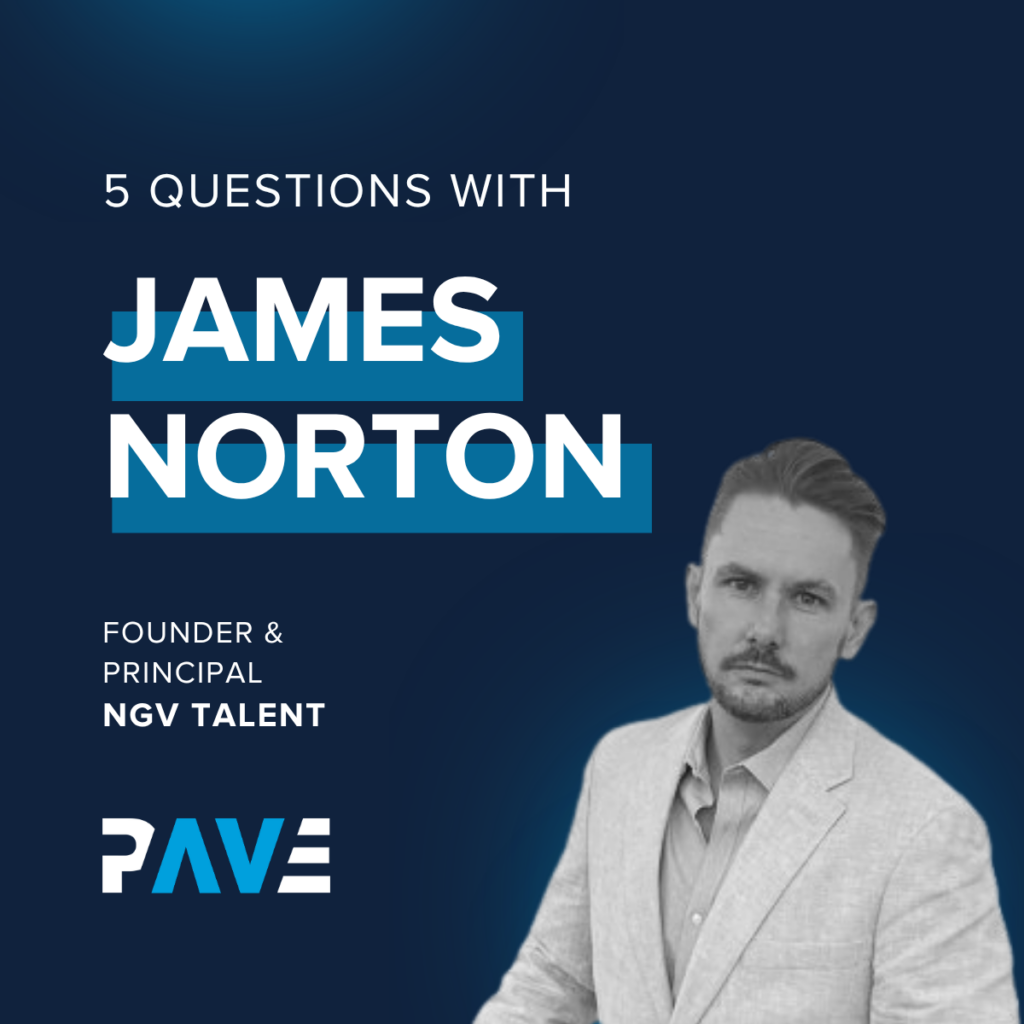
Tell us about yourself and NGV Talent.
I’m the Founder of NGV Talent. We focus exclusively on providing talent to the autonomous mobility industry. We started the company in 2024 after I had spent an increasing amount of time adjacent to the industry, and it was apparent that workforce needs were becoming an increasing challenge for market participants. Over time, we’ve become quite embedded in the ecosystem. Not just helping companies hire, but also providing market intelligence and human capital support that previously didn’t exist.
Last year, you released your first AV industry talent demand report; last month, you released your second. Can you give us a high-level overview of this year’s findings? What stood out most, and how do they compare to last year?
We are strong believers that talent demand is one of the clearest signals of where things are heading for a particular industry or market. I think that analyzing this metric helps cut through some of the noise and gives an accurate picture of the growth of the industry. So, we were very pleased to report – at a high level, hiring has increased significantly year-on-year, both in terms of volume and geographic spread.
We tracked close to 3,000 open roles across 40 companies this year, which was a 118% increase in overall talent demand from 2025. One of the biggest shifts was the expansion in hiring locations from around 65 last year to over 100 this year. That reflects the industry moving beyond a small number of core hubs into a more distributed deployment model.
The Bay Area is still the center of gravity, particularly for engineering, but states like Texas, Arizona, and Florida are seeing meaningful growth. Texas, for example, grew more than sixfold year-on-year.
What do the report’s findings tell us about the current state of the AV workforce? And more broadly, what do they signal about where the industry is as a whole?
The workforce is moving from being heavily R&D-focused to something much more operational.
A few years ago, the majority of hiring was concentrated in core autonomy engineering. That’s still the largest skill category, with 42% of the talent demand, but what we’re seeing now is a more balanced mix of engineering, commercial, and a growing layer of operations and deployment roles.
That shift is important because hiring tends to lag strategy slightly. When you start seeing growth in operations, fleet, and field roles, it usually means companies are moving closer to scaled deployment rather than just development.
We were also interested to find that the engineering needs leaned extremely heavily towards principal, senior, and staff level roles – with senior or above making up more than 60% of the overall needs. That’s under 30% for the wider tech sector.
So, broadly, the data points to an industry that is still investing heavily in technology but is increasingly focused on execution.
There’s a lot of the focus on the industry’s engineering talent, but AV deployment requires more than that. What non-technical roles are becoming more important as the industry matures?
Operations is the big one.
If you look at the data, roles like vehicle operators, fleet specialists, technicians, and command center staff make up 31% of total hiring. In some cases, operator roles alone account for the majority of all open positions.
Beyond that, you’re seeing growth in areas like:
- fleet planning and readiness
- maintenance and service
- training and onboarding
- supply chain and parts
These aren’t always the most visible roles, but they’re essential to getting vehicles on the road and keeping them there.
One of our biggest goals is to attract individuals into this ecosystem. We have created the AV Operations Career Pathway that highlights the available jobs and careers beyond the AV operator role. We have also been creating AV Career Profiles – looking at personal stories of individuals who have created growing careers for themselves in our industry. It’s great to give these opportunities a human face, and we believe it helps to create the employee value proposition.
Looking ahead, how do you see workforce needs evolving over the next 10 years? What skills will be most in demand, and how can the industry prepare for that shift?
I think the industry continues to move toward a blend of high-end engineering and large-scale operational capability.
On the engineering side, there will still be strong demand for autonomy, perception, and systems talent, but increasingly with an emphasis on people who can work across the stack and provide strategic direction rather than in narrow silos.
On the operations side, we are going to see a shift I talked about above, but there will also be an AV workforce shift away from industry participants. Creators of autonomy technology will begin to hand over their software and systems to their future clients – the OEMS, logistics, and fleet management companies – who will need a workforce that understands this new world. That brings more focus on training, standardization, and operational leadership.
One thing that stands out is that the industry doesn’t have a deep existing talent pool for a lot of these roles. Companies are often sharing existing talent between them and not yet doing an amazing job of attracting talent from adjacent sectors. As the industry grows, it’s going to be more and more important for us to communicate the benefits of employment in the sector to outsiders.
Therefore, preparation is less about finding ready-made talent and more about building systems to develop it, whether that’s through training programs, clearer career pathways, or closer collaboration with education and workforce partners.
I am excited to be a part of it.